

Mis(s)presence
Mis(s)presence
Facts
Mis(s)presence v. Paulina Rewucka
Galleri
Mis(s)presence v. Paulina Rewucka
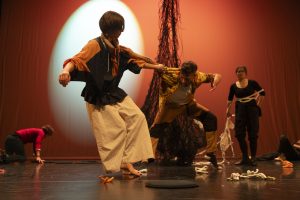
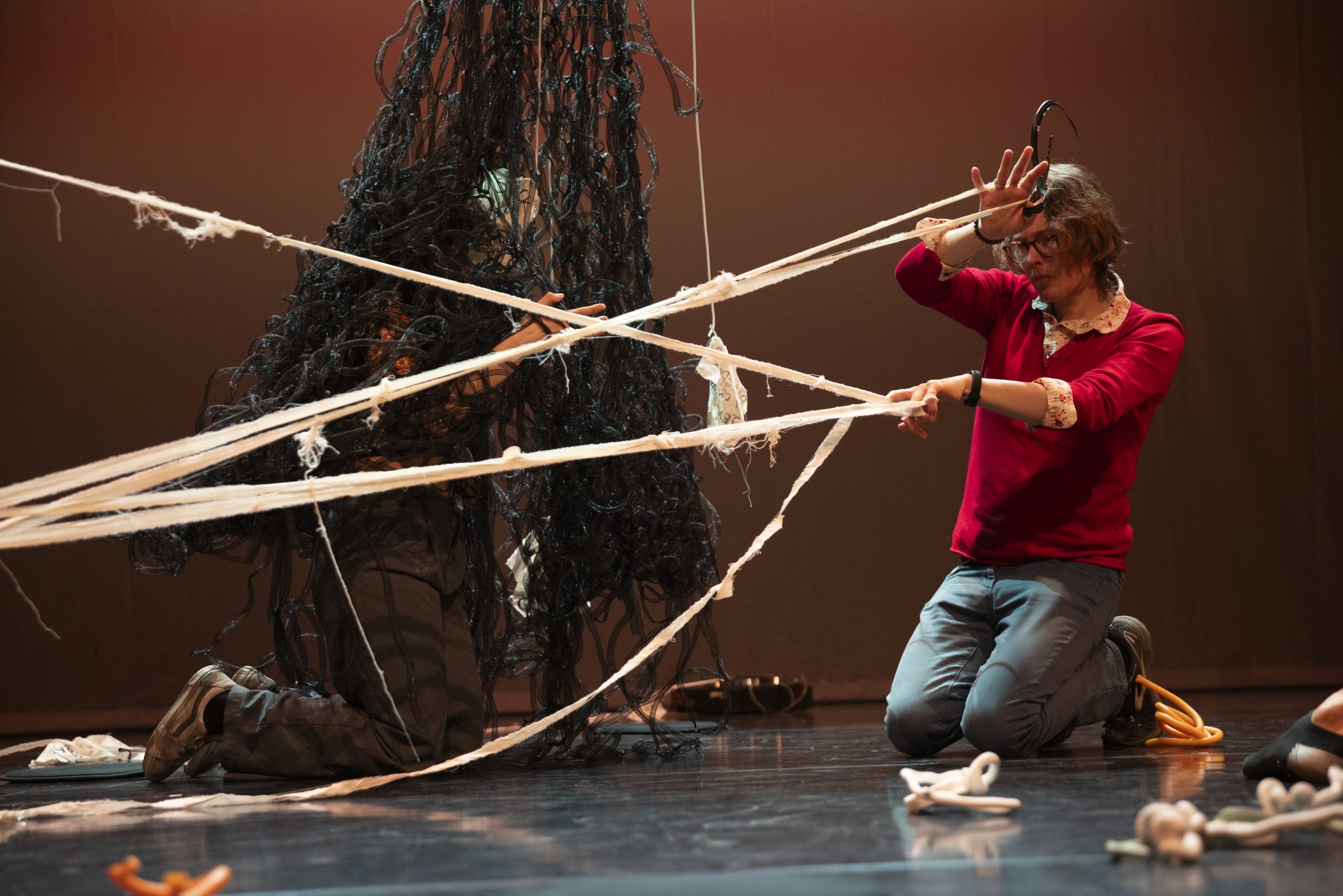
On the floor are two red Japanese tatami mats. On top of them, the performer lies in the fetal position. From there, the body comes to life and is moved by images such as the womb, the worm and the tree, accompanied by vocals, cello and electronics.
A spastic body doesn’t have the same physical expressiveness as the bodies of regular dancers, yet there is a constant internal drama of tension, shock spasms and the daily struggle to make the body respond to internal impulses, or simply to maintain balance when moving from one position to another. This drama may not be visible to the unaware, but that doesn’t make it any less real.
In most cases, spasticity occurs as a combination of premature birth and lack of oxygen to the brain, and the premature nervous system is particularly sensitive to sonic fluctuations. Thus, soprano, performer and composer Annemette Pødenphandt has created a pulsating soundscape using recorded and processed real sound in electronic interplay with live vocals and a cello that squeaks, screams and writhes under the heavy pressure of the bow.
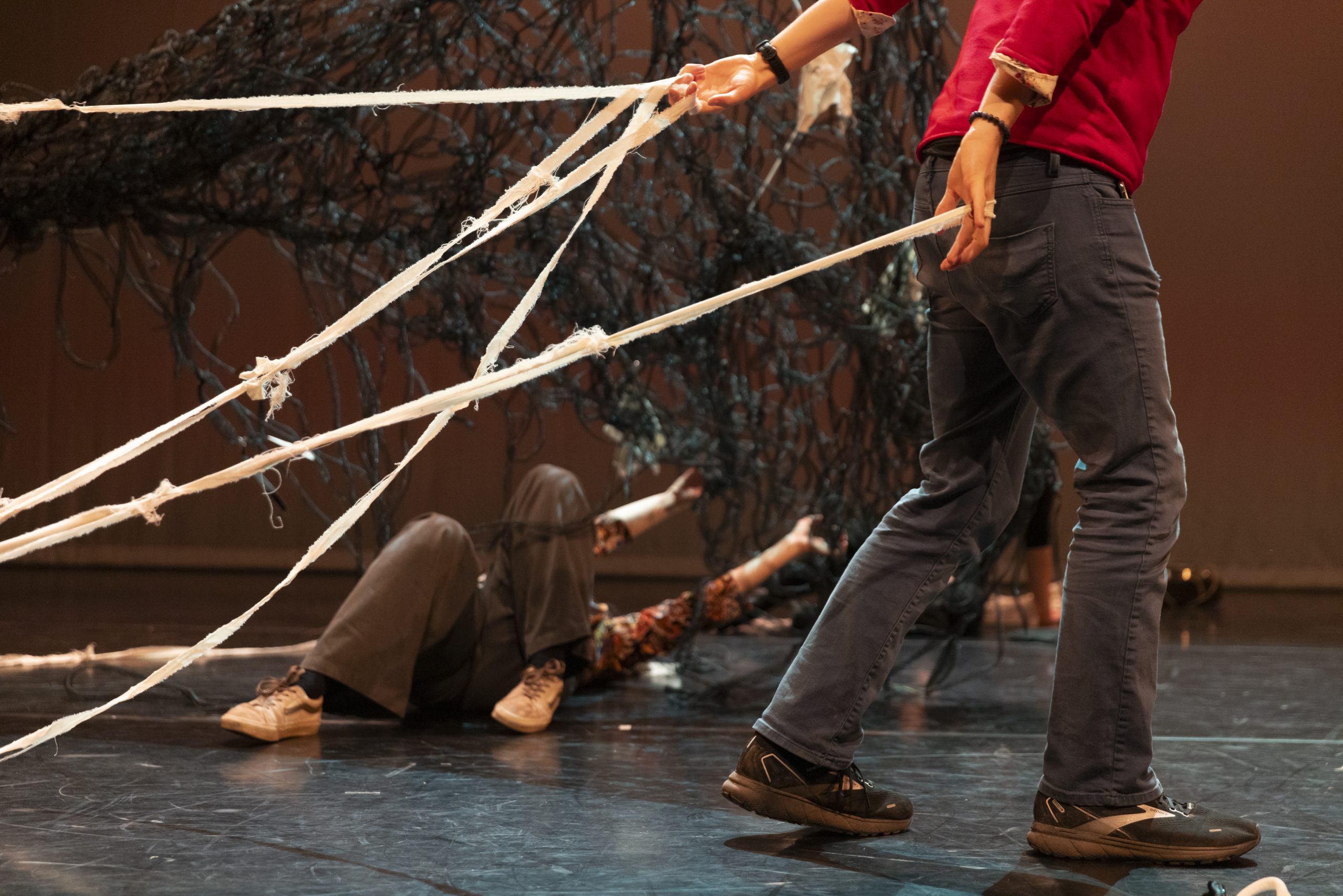
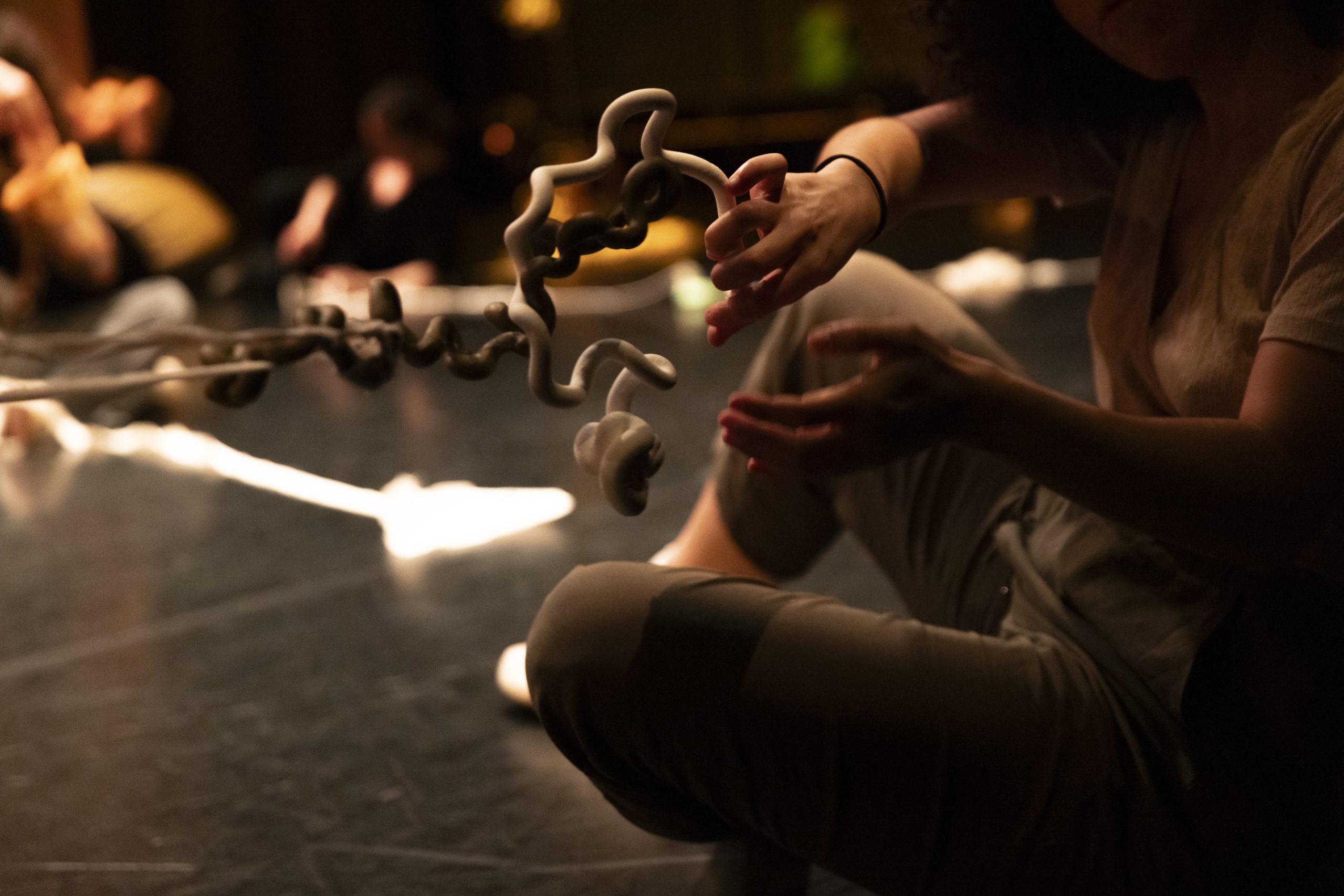
The work is both visually and audibly built around the contrasts between the slow poetry of the inner images and the outer bodily premise, which is very much shaped by tension, friction and resistance.
Link to trailer:
Kaaos Company: Sister, I feel it in my bones
Sister, I can feel it in my bones is a story-driven, physical
performance by two performers that echoes their lives. The piece travels
into a rich world of laughter, ballads, wisdom and the desire to be at
peace as part of the spectrum of life, as one’s self.
The performance
is a mischievous celebration of capturing joy and remembering that
sometimes you have to listen to the strong voice of the sensitive before
you say anything. Much more than disability identity politics, the work
explores the embodied experience and tension between just wanting to
live an equal life, and the myriad ways society continually falls short
along the way. In this way the mirror is held up to us all. The audience
is invited to witness, experience and laugh with the performers and to
understand our part in creating this shared world.
The performers are Christelle Dryer from South Africa and Noora Västinen
from Finland, who is also a long-time member of Kaaos Company, as well
as the director-choreographer Jonna Lehto. Both performers have a
brittle bone disease, Osteogenesis Imperfecta. In addition to Christelle
Dryer, Kaaos Company’s new artists are Ellen Virman, sound designer,
Saana Volanen, lighting and spatial designer, and Moa Larsdotter
Persson, costume designer.